
Table of Contents
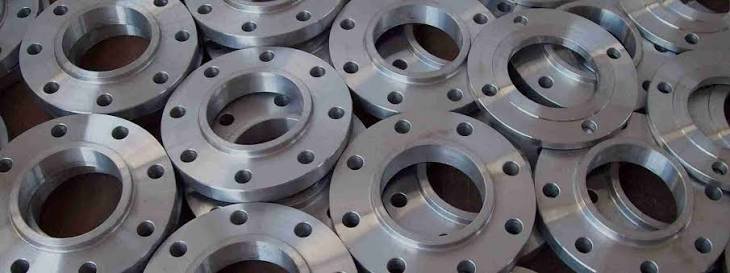
Best Stainless Steel 304/304L Flanges Supplier in India | Top Stainless Steel 304/304L Flanges Stockist in India | Leading Steel 304/304L Flanges Manufacturer in India
What Are Stainless Steel 304/304L Flanges?
Stainless Steel 304/304L Flanges are forged or otherwise manufactured flange components used to connect piping systems and equipment through bolted joints. The flange provides a controlled mating surface for a gasket and enables piping components to be assembled, inspected, maintained, and dismantled without cutting the pipe.
SS 304 is an 18Cr-8Ni austenitic stainless steel commonly selected for general corrosion-resistant service. SS 304L has a maximum carbon content of approximately 0.030%, making it particularly suitable where welding may create a risk of sensitization.
These flanges are commonly used in:
- Chemical processing
- Food and beverage processing
- Pharmaceutical plants
- Oil and gas systems
- Petrochemical plants
- Water treatment
- Power generation
- Refineries
- Dairy and sanitary piping
- General industrial piping
Specification Table of Stainless Steel 304/304L Flanges
| Specification | Stainless Steel 304 | Stainless Steel 304L |
|---|---|---|
| Material Grade | SS 304 | SS 304L |
| UNS | S30400 | S30403 |
| Common Forging Specification | ASTM A182 F304 | ASTM A182 F304L |
| EN / Werkstoff | 1.4301 | 1.4306 / 1.4307 |
| JIS | SUS 304 | SUS 304L |
| Type | Austenitic Stainless Steel | Low-Carbon Austenitic Stainless Steel |
| Standard Carbon | 0.08% max | 0.030% max |
| Chromium | 18–20% | 18–20% |
| Nickel | 8–10.5% | 8–12%* |
| Manganese | 2.00% max | 2.00% max |
| Silicon | 0.75% max* | 1.00% max* |
| Phosphorus | 0.045% max | 0.045% max |
| Sulfur | 0.030% max | 0.030% max |
| Density | Approx. 8.0 g/cm³ | Approx. 8.0 g/cm³ |
| Typical Tensile Strength | 515 MPa min. | 485 MPa min. |
| Typical Yield Strength | 205 MPa min. | 170 MPa min. |
| Typical Elongation | 30–40% depending on specification | 30% min. or as specified |
| Pressure Classes | 150, 300, 600, 900, 1500, 2500 and project-specific | 150, 300, 600, 900, 1500, 2500 and project-specific |
| Dimensions | ASME B16.5 / applicable standard | ASME B16.5 / applicable standard |
| Facing | RF, FF, RTJ and others | RF, FF, RTJ and others |
*Chemical limits can vary with the exact product standard, edition, and material specification. The applicable ASTM/ASME standard and material test certificate should be used for final acceptance.
Chemical Composition Of 304/304L Flanges
The chemical composition of SS 304 and SS 304L gives these grades their combination of corrosion resistance, weldability, strength, and fabrication characteristics. The details of 304/304L Flanges Chemical Content is given by us at Charitra Steel & Alloys in table below:
Chemical Composition of SS 304:
| Element | Composition, % |
|---|---|
| Carbon (C) | 0.08 max |
| Manganese (Mn) | 2.00 max |
| Silicon (Si) | 0.75 max |
| Phosphorus (P) | 0.045 max |
| Sulfur (S) | 0.030 max |
| Chromium (Cr) | 18.00–20.00 |
| Nickel (Ni) | 8.00–10.50 |
| Nitrogen (N) | 0.10 max |
| Iron (Fe) | Balance |
Chemical Composition of SS 304L
| Element | Composition, % |
|---|---|
| Carbon (C) | 0.030 max |
| Manganese (Mn) | 2.00 max |
| Silicon (Si) | 1.00 max |
| Phosphorus (P) | 0.045 max |
| Sulfur (S) | 0.030 max |
| Chromium (Cr) | 18.00–20.00 |
| Nickel (Ni) | 8.00–12.00* |
| Nitrogen (N) | As specified |
| Iron (Fe) | Balance |
The lower carbon limit of 304L is its principal metallurgical distinction from standard 304 and makes it advantageous for welded construction where resistance to weld sensitization is important.
Mechanical Properties Of 304/304L Flanges
Mechanical properties can vary according to the applicable material specification and product form. Typical minimum requirements for ASTM A182 forged material is given by us at Charitra Steel & Alloys in the Stainless Steel 304/304L Flanges Mechanical Properties Table below:
| Property | SS 304 / F304 | SS 304L / F304L |
|---|---|---|
| Tensile Strength | 515 MPa min. | 485 MPa min. |
| Yield Strength, 0.2% | 205 MPa min. | 170 MPa min. |
| Elongation | As specified by standard | 30% min. |
| Hardness, Rockwell B | 92 max. | 92 max. |
| Hardness, Brinell | 201 max. | 201 max. |
| Density | Approx. 8.0 g/cm³ | Approx. 8.0 g/cm³ |
| Modulus of Elasticity | Approx. 193 GPa | Approx. 193 GPa |
ASTM A182 F304L commonly specifies minimum tensile strength of 485 MPa and yield strength of 170 MPa, while F304 commonly has higher minimum tensile and yield requirements of approximately 515 MPa and 205 MPa respectively.
Types of Stainless Steel 304/304L Flanges
Charitra Steel & Alloys supplies SS 304/304L Flanges in multiple configurations to meet different piping and equipment connection requirements.
- Stainless Steel 304/304L Weld Neck Flanges
Weld Neck Flanges feature a tapered hub and are designed for butt-welding to the pipe. They are commonly selected for high-integrity piping systems and applications involving pressure, temperature, or cyclic loading.
- Stainless Steel 304/304L Slip-On Flanges
Slip-On Flanges slide over the pipe and are welded around the pipe. They are commonly selected for general industrial piping where ease of installation and economical fabrication are important.
- Stainless Steel 304/304L Blind Flanges
Blind Flanges are solid discs used to close pipe ends, nozzles, vessels, or unused branches. They are also useful where future access or system isolation is required.
- Stainless Steel 304/304L Socket Weld Flanges
Socket Weld Flanges accommodate the pipe inside a machined socket and are commonly used for smaller-diameter piping systems.
- Stainless Steel 304/304L Threaded Flanges
Threaded Flanges connect to threaded pipe without welding and can be useful where welding is undesirable or impractical.
- Stainless Steel 304/304L Lap Joint Flanges
Lap Joint Flanges are used with stub ends and are suitable for systems requiring frequent dismantling or flange rotation during alignment.
- Stainless Steel 304/304L Orifice Flanges
Orifice Flanges are used with orifice plates and associated instrumentation for flow measurement applications.
- Stainless Steel 304/304L Long Weld Neck Flanges
Long Weld Neck Flanges provide an extended neck and are commonly used for specialized vessel, piping, and high-integrity applications.
- Stainless Steel 304/304L Weld Neck Flanges
Applications of SS 304/304L Flanges
SS 304/304L Flanges are used across industries where reliable piping connections and resistance to many common corrosive environments are required.
Major applications include:
- Chemical processing plants
- Petrochemical facilities
- Oil and gas piping
- Refineries
- Pharmaceutical manufacturing
- Food processing plants
- Dairy and beverage industries
- Water and wastewater treatment
- Power generation
- Heat exchangers
- Storage tanks
- Process equipment
- Pulp and paper plants
- General industrial piping
- Sanitary piping systems
SS 304/304L is particularly attractive for applications requiring a combination of corrosion resistance, cleanliness, fabrication ease, and relatively low maintenance.
Benefits of Using Stainless Steel 304/304L Flanges
- Excellent General Corrosion Resistance
The chromium content of SS 304/304L contributes to the formation of a passive surface layer that provides resistance to many atmospheric and process environments.
- Good Weldability
Both grades are readily weldable, while 304L is particularly suited to welded fabrication because its lower carbon content reduces the risk of sensitization.
- Good Fabrication Characteristics
304/304L stainless steel offers good forming and machining characteristics for many industrial manufacturing operations.
- High Durability
Properly selected SS 304/304L flanges can provide long service life with relatively low maintenance requirements.
- Hygienic Surface
The smooth, cleanable surface of stainless steel makes 304/304L suitable for food, beverage, pharmaceutical, and sanitary applications.
- Wide Availability
SS 304/304L is one of the most widely used stainless steel grades, making compatible piping components and replacement parts comparatively accessible.
- Multiple Configuration Options
Weld Neck, Slip-On, Blind, Socket Weld, Threaded, Lap Joint, Orifice, and Long Weld Neck configurations allow engineers to select a flange according to the piping design.
- Excellent General Corrosion Resistance
Stainless Steel 304 vs 304L Flanges
The primary difference between SS 304 and SS 304L is carbon content.
| Feature | SS 304 | SS 304L |
|---|---|---|
| UNS | S30400 | S30403 |
| Carbon | 0.08% max | 0.030% max |
| Weldability | Excellent | Excellent, particularly for welded construction |
| Sensitization Resistance | Lower than 304L after welding | Better due to low carbon |
| Minimum Tensile Strength, ASTM A182 | Approx. 515 MPa | Approx. 485 MPa |
| Minimum Yield Strength, ASTM A182 | Approx. 205 MPa | Approx. 170 MPa |
| Typical Application | General corrosion-resistant service | Welded piping and equipment |
| Selection Priority | General service and strength | Welding and intergranular corrosion considerations |
In many applications, 304 and 304L can be dual-certified when the material meets the requirements of both grades. However, the actual MTC and applicable purchasing specification should be checked before acceptance.
Standards, Dimensions, and Pressure Ratings Of 304/304L Flanges
SS 304/304L Flanges can be manufactured and supplied according to recognized national and international standards.
Common Material Standards
- ASTM A182 / ASME SA182 – Forged or rolled alloy and stainless steel flange materials
- ASTM A240 – Stainless steel plate, sheet, and strip where applicable to product construction
- ASTM A403 – Wrought austenitic stainless steel piping fittings where applicable
Common Dimensional Standards
- ASME B16.5 – Pipe Flanges and Flanged Fittings, commonly covering NPS 1/2 through NPS 24
- ASME B16.47 – Large-diameter steel flanges
- EN 1092-1 – Flanges and their jointing dimensions for applicable European systems
- DIN flange dimensions where specifically required
- JIS flange standards for Japanese-standard piping systems
Common Pressure Classes
Depending on the applicable standard, SS 304/304L Flanges may be supplied in pressure classes such as:
- Class 150
- Class 300
- Class 600
- Class 900
- Class 1500
- Class 2500
Pressure-temperature ratings are not determined by flange material alone. The rating depends on the applicable standard, pressure class, temperature, flange configuration, material group, gasket, bolting, and design conditions. Therefore, the applicable standard should always be consulted before selecting a flange for a pressure-containing system.
How to Choose the Right SS 304/304L Flange
Selecting the correct flange requires consideration of both piping design and operating conditions.
- Identify the Pipe Size
Determine the nominal pipe size or DN/NPS required for the connection.
- Select the Flange Type
Choose Weld Neck, Slip-On, Blind, Socket Weld, Threaded, Lap Joint, Orifice, or another configuration according to the piping design.
- Determine the Pressure Class
Select the appropriate Class 150, 300, 600, 900, 1500, 2500, or other rating based on the system’s pressure-temperature requirements.
- Select the Facing
Common choices include Raised Face (RF), Flat Face (FF), and Ring Type Joint (RTJ), depending on the piping system and sealing requirements.
- Confirm Material Grade
Choose SS 304 or SS 304L based on corrosion conditions, welding requirements, mechanical requirements, and project specifications.
- Check Dimensions
Confirm flange OD, thickness, bore, bolt circle, bolt-hole diameter, number of holes, and facing dimensions against the applicable standard.
- Verify Testing and Documentation
For critical applications, specify required inspection and documentation such as:
- Material Test Certificate
- Heat Number Traceability
- PMI Testing
- Dimensional Inspection
- Hardness Testing
- Chemical Analysis
- Mechanical Testing
- Hydrostatic or other project-specified testing
- EN 10204 3.1/3.2 documentation where required
- Identify the Pipe Size
Stainless Steel 304 304L Flanges Price in India
The Stainless Steel 304 304L Flanges Price in India varies according to several factors rather than having one fixed market price.
Key price factors include:
- Flange size
- Flange type
- Material grade
- ASTM/ASME specification
- Pressure class
- Flange thickness
- Facing type
- Forging and machining requirements
- Quantity ordered
- Testing requirements
- Certification and documentation
- Surface finish
- Packaging
- Current stainless steel raw-material prices
- Domestic delivery location
For this reason, buyers should request a project-specific quotation rather than relying on a generic online price. Charitra Steel & Alloys can provide pricing based on the exact SS 304/304L flange size, type, standard, pressure class, quantity, and delivery requirements.
Request a quotation for current Stainless Steel 304/304L Flanges Price in India from Charitra Steel & Alloys.
Why Buy SS 304/304L Flange in India From Charitra Steel & Alloys?
Charitra Steel & Alloys can be considered for SS 304/304L flange requirements where customers need specification-based sourcing and industrial-grade stainless steel products.
- Wide Product Selection
Source SS 304/304L flanges in Weld Neck, Slip-On, Blind, Socket Weld, Threaded, Lap Joint, Orifice, Long Weld Neck, and other configurations.
- Multiple Sizes and Pressure Classes
Requirements can be matched to the required NPS/DN, flange dimensions, and pressure class.
- Specification-Based Supply
Flanges can be supplied according to applicable ASTM, ASME, EN, DIN, or JIS requirements as specified by the customer.
- Quality Documentation
For projects requiring traceability, customers can request appropriate material certificates, inspection documentation, and testing as part of the purchase specification.
- Custom Requirements
Non-standard dimensions, special facing requirements, drawings, machining requirements, and project-specific specifications can be discussed before order confirmation.
- Industrial Applications
SS 304/304L flange solutions are suitable for chemical, pharmaceutical, food processing, water treatment, petrochemical, power, and general industrial piping applications.
- Competitive Sourcing
Charitra Steel & Alloys can provide quotations based on grade, size, type, pressure class, quantity, testing, documentation, and delivery requirements, allowing customers to compare the complete supply specification rather than only the per-piece price.
- Wide Product Selection
Countries We Deliver
Saudi Arabia, Iran, Iraq, UAE, Qatar, Bahrain, Oman, Kuwait, Turkey, Yemen, Syria, Jordan, Cyprus, Nigeria, Algeria, Angola, South Africa, Libya, Egypt, Sudan, Equatorial Guinea, The Republic Of Congo, Gabon, USA, Canada, Mexico, Panama, Costa Rica, Puerto Rica, Trinidad And Tobago, Jamaica, Bahamas, Denmark, Russia, Norway, Germany, France, Italy, Uk, Spain, Ukraine, Netherland, Belgium, Greece, Czech Republic, Portugal, Hungary, Albania, Austria, Switzerland, Slovakia, Finland, Ireland, Croatia, Slovenia, Malta, India, Singapore, Malaysia, Indonesia, Thailand, Vietnam, South Korea, Japan, Sri Lanka, Maldives, Bangladesh, Myanmar, Taiwan, Cambodia, Argentina, Bolivia, Brazil, Chile, Venezuela, Colombia, Ecuador, Guyana, Paraguay, Uruguay, New Zealand, Romania, Puerto Rico, Nepal, Kenya, Afghanistan, Lithuania, Belarus, Zimbabwe
Cities We Deliver
Indore, Kuala Lumpur, Al Jubail, Pimpri-Chinchwad, Sharjah, Karachi, Chandigarh, Bogota, Muscat, Madrid, Tehran, Granada, Jakarta, Los Angeles, Rio de Janeiro, Melbourne, Cairo, New York, Busan, Milan, Montreal, Singapore, Sydney, Dubai, Lagos, Gurgaon, Port-of-Spain, Hong Kong, Navi Mumbai, Secunderabad, Bangkok, Aberdeen, Bhopal, Atyrau, Caracas, Jamshedpur, Thane, Faridabad, Ahvaz, Ahmedabad, Hanoi, Bengaluru, Dallas, Moscow, Surat, Riyadh, Rajkot, Al Khobar, Hyderabad, Haryana, Ernakulam, Gimhae-si, Algiers, Thiruvananthapuram, Brisbane, Calgary, Mumbai, Chennai, Courbevoie, Toronto, Vung Tau, Ankara, Doha, Nagpur, Howrah, Ranchi, Perth, Noida, Houston, Kolkata, Chiyoda, Mexico City, Edmonton. Geoje-si, Abu Dhabi, Santiago, New Delhi, Colombo, Ludhiana, Lahore, Coimbatore, Ho Chi Minh City, Manama, Ulsan, London, Visakhapatnam, Jaipur, Kuwait City, Seoul, Istanbul, Pune, Baroda, Kanpur, La Victoria, Jeddah, Dammam, Petaling Jaya, Nashik, Vadodara.
Frequently Asked Questions
1. What is the difference between Stainless Steel 304 and 304L Flanges?
The principal difference is carbon content. SS 304 generally permits up to 0.08% carbon, whereas 304L has a maximum carbon content of approximately 0.030%. The lower carbon content of 304L makes it particularly suitable for welded construction where resistance to sensitization is important.
2. What standards are used for Stainless Steel 304/304L Flanges?
Forged SS 304/304L Flanges are commonly specified to ASTM A182 / ASME SA182, while dimensional requirements may be specified to ASME B16.5 or ASME B16.47 depending on flange size and application. Other international standards can be used when specifically required by the project.
3. What sizes of SS 304/304L Flanges are available?
SS 304/304L Flanges are available in various NPS/DN sizes. ASME B16.5 commonly covers NPS 1/2 through NPS 24, while larger-diameter flange requirements can fall under standards such as ASME B16.47. Custom sizes may also be available according to drawings and project specifications.
4. What types of Stainless Steel 304/304L Flanges does Charitra Steel & Alloys supply?
Depending on the requirement, Charitra Steel & Alloys can cater to Weld Neck, Slip-On, Blind, Socket Weld, Threaded, Lap Joint, Orifice, Long Weld Neck, and other SS 304/304L flange configurations.
5. How can I get the Stainless Steel 304/304L Flanges Price in India?
The price depends on size, flange type, pressure class, grade, standard, quantity, machining, testing, certification, and current raw-material costs. Contact Charitra Steel & Alloys with your required size, type, grade, pressure class, quantity, and delivery location to obtain a project-specific quotation.